
European voice in Ukraine peace talks must include UK, Taoiseach says
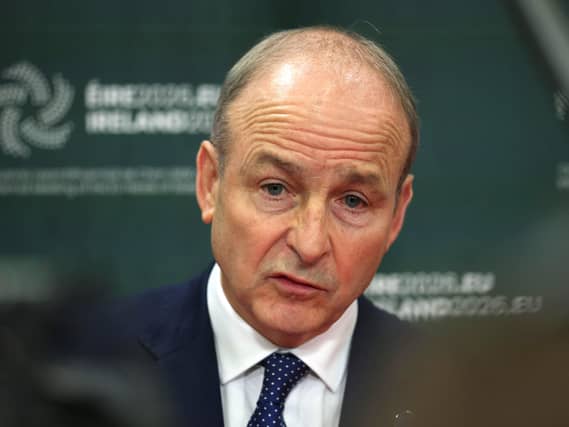

Micheál Martin acknowledged that pressure was increasing on European nations to agree how they would be represented in peace negotiations.
A European voice at the Ukraine peace talks cannot be confined to EU member states and countries like the UK should have a role, Ireland’s premier has said.
Taoiseach Micheál Martin acknowledged that pressure was increasing for European nations to agree how they would be represented in negotiations involving Ukraine, Russia and the US when they resume.
Mr Martin was speaking ahead of an informal meeting of the EU Council in Dublin on Friday.
On Thursday US talks envoy Jared Kushner indicated that Russian President Vladimir Putin was willing to accept European involvement in the process.
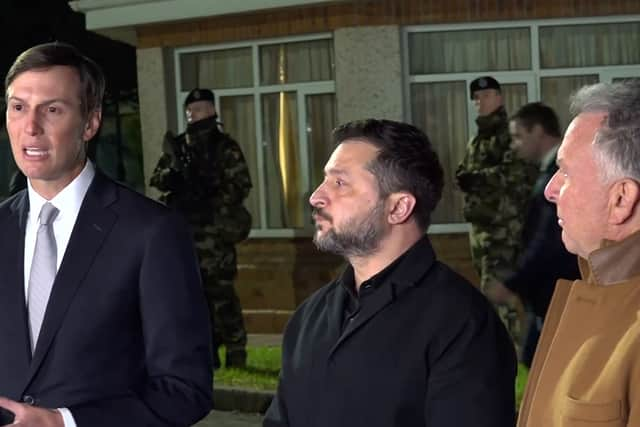
Mr Kushner was speaking after he and fellow US envoy Steve Witkoff held talks with Ukrainian President Volodymyr Zelensky at a Dublin military airbase – discussions that took place shortly after US President Donald Trump’s representatives held a similar meeting with Mr Putin in Moscow.
The exchanges followed talks involving the US envoys and delegations from Ukraine and Russia in Abu Dhabi earlier in the week – negotiations that did not make substantive progress toward ending the conflict but did see the warring sides agree to a significant prisoner release deal.
Dublin has become a focal point for deliberations around efforts to end the war this week because the city has been hosting two major political meetings across two days.
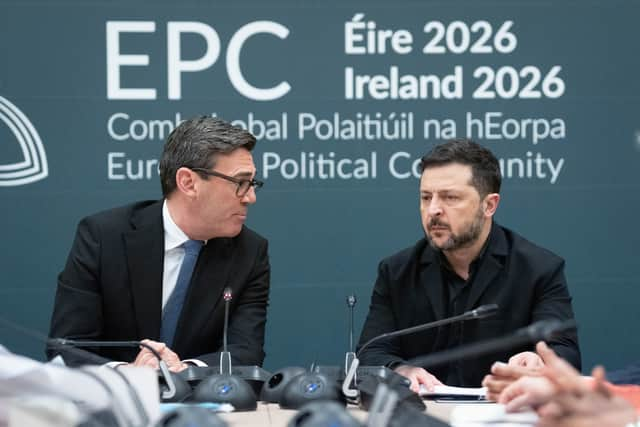
EU leaders also convened in the Irish capital on Thursday when they were joined by a range of other allies and partners, including UK Prime Minister Andy Burnham and Canadian Prime Minister Mark Carney, for a meeting of the European Political Community (EPC).
Mr Martin said it was “now clear that Europe will be at the talks”.
He added: “The discussions today will focus perhaps both on the content and the type of peace that Europe wants to secure, the sustainable peace, and then also in terms of there will be discussion, obviously, in terms of who represents Europe.”
The Taoiseach was asked whether the E3 coalition of the UK, France and Germany should take the lead when it comes to representing the continent. Officials from the E3 have been involved in the margins of the process to date.
Mr Martin said no decisions had been taken but noted the E3 format had been used in previous peace negotiations. Some within the European Union have said that a senior EU diplomat should take on the role of talks envoy.
Mr Martin told reporters at the Convention Centre in Dublin: “In some shape or form, there will be, I think, an E3 dimension to this, and I don’t think it can just be a European Union dimension, because the Coalition of the Willing has involved far more than the European Union.
“The United Kingdom has had a significant role, Norway has had a very significant role in terms of the Ukraine, and that all has to be taken into consideration because it’s a European continent-wide issue.”
The Taoiseach was asked whether he would put himself forward as a potential envoy. “No definitive decisions have been taken,” he replied.
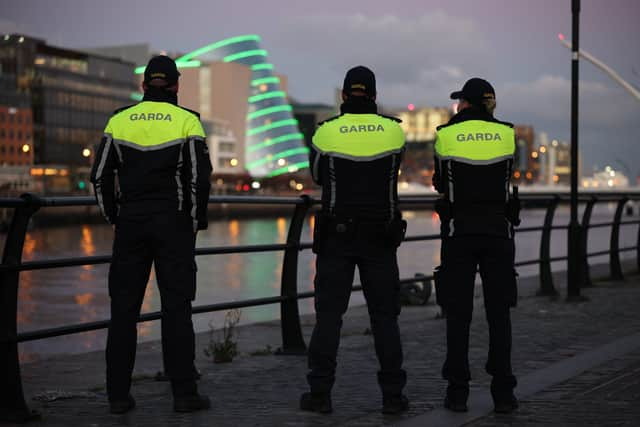
Dublin hosted the EPC summit and Friday’s informal meeting of the EU Council as part of Ireland’s six-month presidency of the EU Council.
The major back-to-back political gatherings have seen the Irish authorities roll out the biggest security operation in the history of the state.
Addressing the EPC on Thursday, Mr Zelensky warned European leaders of Russia’s intent to reshape the security framework of the continent.
Mr Zelensky also expressed concern at the latest speed restrictions on the SpaceX’s Starshield satellite internet service over occupied parts of Ukraine, from where Russian drone attacks are launched.
He told delegates the 100mph restriction was limiting Ukraine’s ability to take out the fast-moving jet-powered drones.
Mr Martin was asked about Russian suggestions that any peace deal with Ukraine should involve a redrawing of Europe’s security architecture.
He said European leaders voiced “concerns” about that at the EPC meeting in Dublin on Thursday.
“There is a security architecture, but Russia violated that by invading Ukraine,” he said.
“But look, in any attempts to bring a war to an end, we know from history that processes have to be developed.
“You know, you have to get people to a table. You’ve got to get people off the war footing, but that is why the European perspective is important in terms of what does a peace look like.
“What does a new, post-war Ukraine look like in the context of the European Union, in the context of Nato and other organisations?”
He added: “Now the fundamentals aren’t going to change in terms of the Nato architecture, and people were very clear about that at yesterday’s meeting.”
The Taoiseach reiterated that Ireland would be prepared to deploy troops to Ukraine in a peacekeeping capacity if there was a requirement for ceasefire monitoring as part of any peace deal.
Mr Martin also stressed the need for EU leaders to agree its future level of financial support for Ukraine.
“What is clear is Ukraine will need clarity for 2027,” he said.
“Our partners will need clarity for 2027. The sooner that happens the better because it sends a very strong signal that Europe is there for the long haul for Ukraine, which then has a consequential impact on talks and on perhaps concentrating minds everywhere in terms of bringing this war to an end.”
Mr Kushner, Mr Witkoff and Mr Zelensky appeared together to give statements to the media after their Thursday night meeting at Baldonnel military aerodrome on the outskirts of Dublin.
Mr Kushner said: “We cannot conclude this deal without the Europeans being at the table.”
He added: “I think that we’re able to achieve that with President Putin.”
Mr Zelensky stressed the importance of Europe’s involvement.
“They will have a voice,” he told reporters at the airbase. “This is important for us because the war is in Europe.”
Friday’s informal EU Council meeting will also include a strategic discussion on artificial intelligence (AI).
The agenda said leaders of the member states would discuss how to “harness AI’s potential to boost European competitiveness and examine its wider impact on society, security and trust”.