
Minister criticised for claiming criminal courts running ‘effectively’
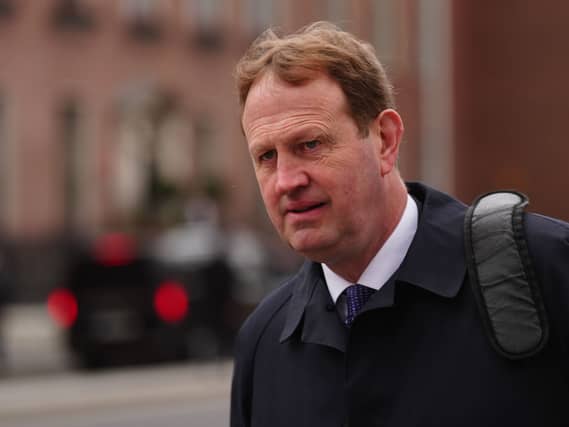

Jim O’Callaghan has contended he has made ‘very fair’ concessions around his reforms of the criminal legal aid system.
Jim O’Callaghan “doesn’t seem to be on top of his brief”, a striking solicitor has said, after the Justice Minister claimed the criminal courts are running “effectively” despite a large-scale withdrawal of services by lawyers.
Mr O’Callaghan has contended he has made “very fair” concessions around his reforms of the criminal legal aid system which prompted more than 100 solicitors to withdraw services.
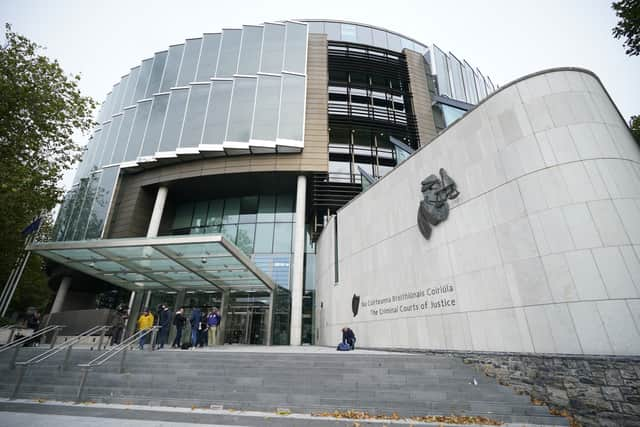
The solicitors’ strike has led to disruption in proceedings across the country where defendants have been without legal representation.
Asked about reported “chaotic” scenes as courts resumed their normal calendar this week, Mr O’Callaghan said he disagreed with the “characterisation of what’s happening in the courts”.
He told reporters in Ballymun, Dublin on Thursday: “I’m satisfied that there are solicitors who are operating the scheme and doing so effectively.”
Pressed on defendants failing to represent themselves effectively or challenge gardaí over bail objections, Mr O’Callaghan said: “I’m hearing reports from around the country, and as you’ll see from media reports in general around the country, the criminal courts are operating, and they’re operating effectively.”
Sinn Féin justice spokesman Matt Carthy said Mr O’Callaghan’s claim was “delusional” and “completely at odds with what we are hearing from those working in the area”.
He said he had “huge concerns” about the lack of solicitors available for garda interviews and said backlogs developing in the legal system will “undoubtedly” lead to further delays, increasing trauma for victims.
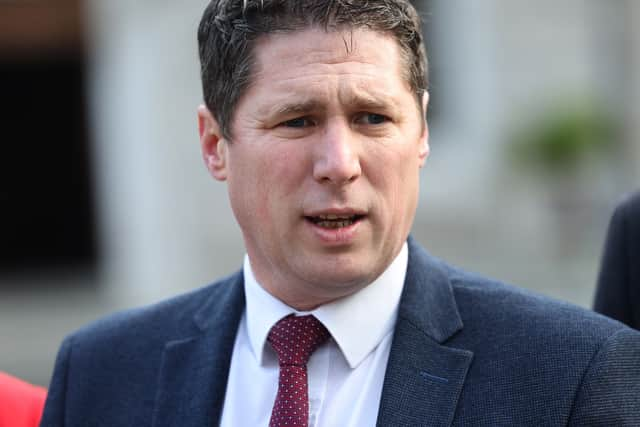
Mr Carthy, the chairman of the Oireachtas Justice Committee, said the body would hold a meeting on legal aid at the end of September.
He said: “It is now clear that the Minister for Justice does not have a genuine interest in reforming the operation of our courts to tackle delays and improve access to justice.
“His approach has been arrogant and his failure to engage properly is at the root of the fact that this dispute is ongoing.”
One of the solicitors participating in the withdrawal of services said the comments were “extremely concerning”.
Jenny McGeever questioned when the last time Mr O’Callaghan had been in the District Court or spoken to stakeholders.
She told the Press Association: “Has he been in court to see how judges are trying to cope with this chaos?
“He is either blind to what is happening in the courts or is ignorant because he is ill-informed as to whoever is advising him – because he is being very badly advised if that is the case.”
Ms McGeever said solicitors had hoped for constructive engagement with Mr O’Callaghan but accused the minister of adopting a “take-it-or-leave-it” approach, adding: “I don’t know what you would call that – it is not negotiation.
“Solicitors have asked to meet and actually have real-life discussions about this situation.
“None of us want to be on strike, we want to be back at work – but he has not taken up that opportunity.”
Mr O’Callaghan said certificates for the scheme are still being issued.
It is understood that the Dublin strike affects all but two solicitors’ firms working in the city, while it has been widely reported that there has been a 93% reduction in criminal legal aid certificates issued in July, compared with last year.
Ms McGeever said: “The data contradicts what he’s saying. How does he square that?”
She said Mr O’Callaghan’s approach is “not a good sign for this ending any time soon”, adding that solicitors wanted to be treated “with a bit of respect and fairness”.
She said: “He doesn’t seem to be on top of his brief – and that is extremely concerning.”
In July, Mr O’Callaghan introduced a flat fee for criminal legal aid in the District Court, rather than per-appearance fees, prompting anger and withdrawal of services among solicitors practising in the area.
Previously, solicitors were given 240 euro for the first appearance and 60 euro on subsequent appearances.
The new 520 euro flat fee is equivalent to five appearances under the old system – which Mr O’Callaghan argues is the average amount of appearances for criminal legal aid cases – plus an 8% increase in fees which was given to all criminal lawyers this year.
Solicitors have been withdrawing their services from criminal cases where a person does not have the means to pay for a lawyer and requires legal aid.
This has resulted in criminal cases being delayed, which support groups have said is having an impact on survivors and victims.
At the end of July, the minister said the new flat fee would remain but would be “split” so that two-thirds of the fee would be paid at the start of a case and the remaining third would be paid at the end of the case, or after 12 months after the case starts, whichever is first.
The minister also confirmed the new criminal legal aid scheme allows for a new certificate to be issued for an accused person where the charges are “distinct and separate” from any court appearance by them previously.