
SETU Carlow researcher named among top 2% of scientists worldwide
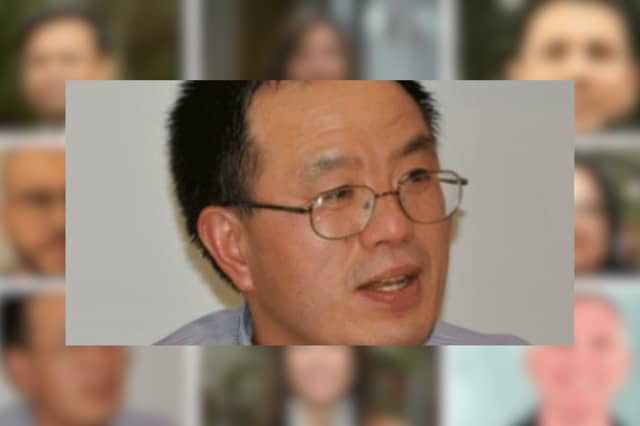

A researcher based at SETU Carlow has been recognised globally for his work
Dr Wanan Sheng teaches in the Department of Aerospace and Mechanical Engineering at SETU Carlow.
His current research focuses on how wave energy converters can capture more energy from the sea.
His career spans marine hydrodynamics, aerodynamics and offshore renewable energy.
Dr Sheng led ship-motion testing at the China Ship Scientific Research Centre before completing a doctorate at the University of Glasgow, where he developed a model used to study airflow around helicopter blades and wind turbines.
As lead hydrodynamicist at University College Cork’s Hydraulics and Maritime Research Centre, he contributed to European and industry projects on wave energy.
His research uses computer models to show how changes to the shape and operating settings of wave energy converters can improve the amount of energy they capture, giving engineers a basis for comparing designs before building prototypes.
Dr Sheng is among eight other SETU colleagues, the rest of whom are working at SETU Waterford, to have been named among the global 2%.
In 2025, SETU announced five researchers in the edition and four in 2024, highlighting the growing international impact of research taking place across SETU.
The researchers recognised this year work across a wide range of disciplines, including eye health, advanced manufacturing, sustainable agriculture, public health and renewable energy.
Their research includes studies on how nutrition can support eye health and alternatives to antibiotics in farming.
“Nine of our colleagues have earned international recognition for work they have built up over many years. That is a proud moment for SETU,” Professor Veronica Campbell, President of SETU, said.
“I congratulate each of the researchers named and acknowledge the teams and collaborators who have helped make their work possible,” she added.
The researchers appear in the single-year list published by TOPSCINET, which draws on Scopus citation data released through the Elsevier Data Repository.
The 2026 edition uses citations received during 2025.
The list highlights researchers whose published work is widely cited by others in their field.
It also includes citations to work published earlier in their careers.