
High court hears defendants have been unfairly detained because of legal aid row
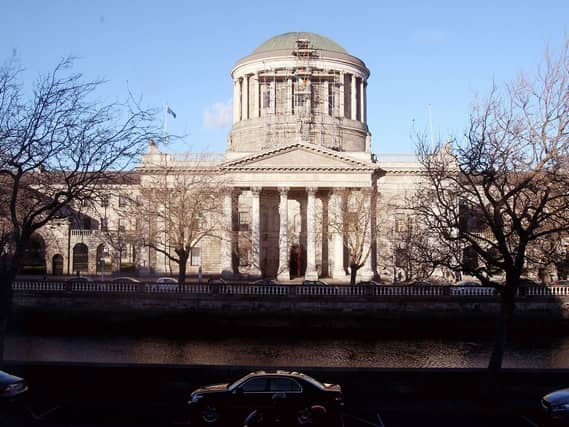

The High Court heard from lawyers representing defendants who did not have solicitors during bail hearings
Lawyers representing 21 defendants have argued in the High Court that they have been unfairly detained by the State because of the ongoing row over legal aid payments.
Criminal defence solicitors working in the district courts have withdrawn their services after the Minister for Justice introduced reforms to fees on July 1.
Up to 200 across the country have indicated they would resign from the legal aid panel in protest and, this week, solicitors in Dublin held a two-day stoppage.
This has meant defendants, who are entitled to legal aid, have often not had legal representation when appearing in court, including when applying for bail.
Appearing before the High Court in Dublin, barrister Michael Lynn laid out a habeas corpus application.
Habeas corpus is the legal mechanism which allows those whom the State has detained to challenge that detention in court.
The defendants “most definitely were” denied fundamental rights of representation, Mr Lynn argued.
He said their bail hearings were “not a proper exercise in the administration of justice”.
Citing legal precedent, he said their need to be represented “is essential to the administration of justice” and without it the accused “is exposed to the risk of injustice”.
He described the “adversarial” legal system as a three-legged stool and said if it were “not stable” it would “collapse”.
Addressing the High Court Judge, Ms Justice Mary Rose Gearty, he said he was not asking her to determine “the merits of the legal aid system”, but rather if there had been a “fundamental lack of fairness”.
Ms Gearty responded: “My views on the scheme are completely irrelevant.”
Outlining one of the lead cases, Mr Flynn described how a 31-year-old mother, accused of robbery and entitled to legal aid, repeatedly pleaded for a solicitor during a July 4 hearing.
Bail was opposed, and when the district court judge asked if she would like to make a bail application, she responded: “Yes please”, but added “I don’t know how to” and “I am not used to this”.
Acknowledging the judge was in a “very difficult position”, Mr Flynn said the case was then put back to July 8, during which time the defendant remained in custody.
The judge tried to assist the defendant, Mr Flynn said, and sought a solicitor on the defendant’s behalf but was unable to do so.
The woman said she was afraid she would lose her home if she were not released, and in turn, afraid she would lose custody of her four-year-old child.
Her daughter’s father had died before she was born and the woman said: “She only has me left.”
The judge told her she was in “a very difficult position” and that there were strong objections to bail, which she was then refused and told the defendant to go to the High Court to make an application.
The woman was told by the Judge: “You do have a constitutional right, and I’m terribly sorry your rights weren’t vindicated today.”
Mr Lynn said the situation was “crying out for a legal professional to stand up for this woman”.
The court heard from another of other cases where defendants who are unable to read or who were intoxicated during hearings and did not have solicitors to assist or represent them.
Barrister Colman FitzGerald said while there may be a limited number of people “capable of vindicating their own constitutional rights” or someone trained in criminal defence law may be a defendant, “that is not the case in respect of the applicants of his cases”.
During the hearing, Ms Gearty said she had seen several examples of judges “reminding a defendant not to prejudice themselves, which is the exact point a solicitor is needed”.
Another barrister, Frank Crean, said the Minister for Justice had described the introduction of the reforms as having experienced “disruption and difficulties”; he said his clients who have faced detention would be less “sanguine” about the matter.
Representing the Director of Public Prosecutions, Sunniva McDonagh acknowledged it was “not ideal” to have a bail application without the defendant represented by a solicitor, but said some of the cases before the court were “very serious”.
She outlined it was their position that it was not unlawful “per se” to proceed without a solicitor.
Providing a hypothetical example, she said if a precedent was set someone facing serious charges could appear without a solicitor as a “ploy” and later be released on habeas corpus.
Necessitating a solicitor could also put judges “in a dilemma” if defendants ask not to be represented, she added.
She said the applications made on Friday did not “meet the threshold” needed as there had not been a “fundamental denial of justice”.
She said it was not enough to prove what had happened was unlawful, “it needs to be complete denial of fair procedures”, she said.
The Minister for Justice was represented by barrister Eoin Carolan, who claimed there was a “vagueness” in the argument being put forward by the applicants.
A ruling on the matter is expected on Monday.